|
|
| |
|
|
|
|
|
| |
|
|
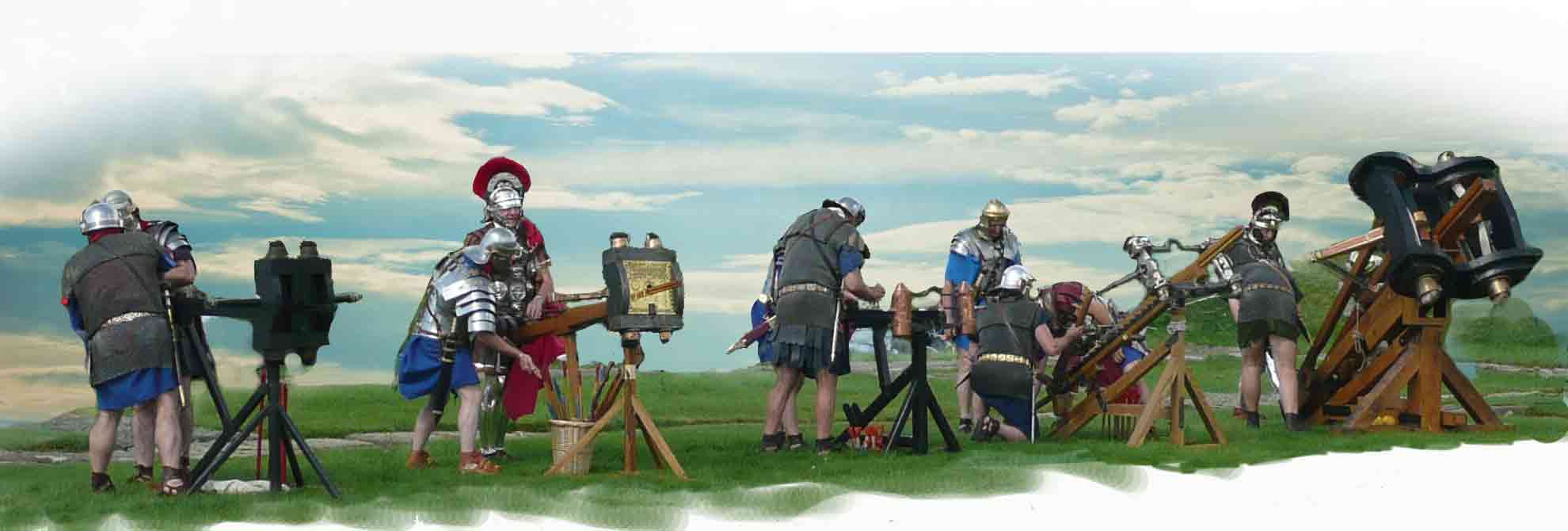
Roman Artillery by Gaius Vedennius Moderatus, Architectus
The formidable firepower of the Roman army was
achieved by hand thrown weapons (pila;slingshots), hand drawn longbows
and composite bows, mechanical crossbows (arcuballistae), and
winched bolt-shooting and stone-throwing catapults.
The Romans adopted the torsion artillery
invented by Greek engineers - catapults powered by highly tensioned
and twisted rope springs.Greek and Roman artillery is the best understood
of all branches of ancient applied technology because of the remarkable
survival of a collection of technical manuals written by engineers.
The Society's artillery officer, Moderatus, is engaged in long-term
research on these texts and on the growing number of archaeological
finds of catapult parts. This enables the Society's professional
engineer, Fatalis, to build full size reconstructions, which are
put through a programme of tests designed to assess the weapons'
capabilities.
The Society's reconstructions of Roman artillery
displayed at public events are based on the most up to date information
and research. Their strike-power and accuracy are demonstrated
in Adam Hart-Davis' programme "Invasion" in the above BBC2
series.
|
|
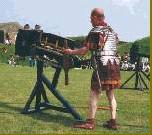
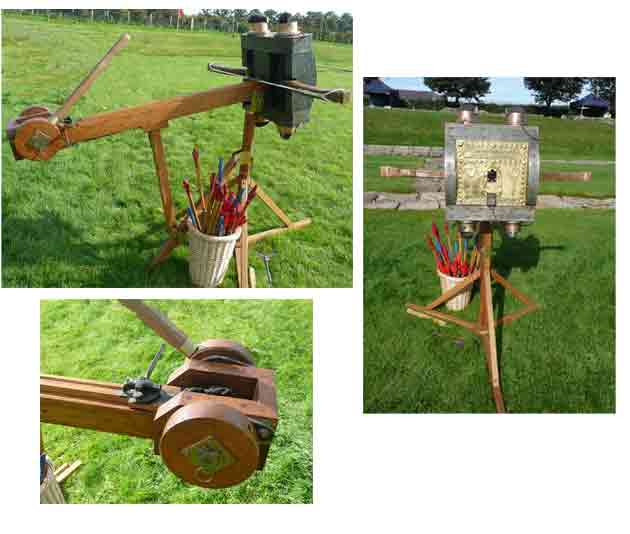
Vitruvius'
Ballista
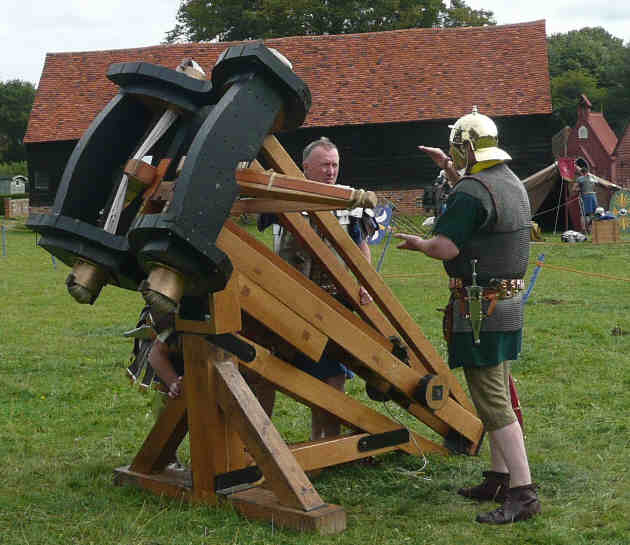
This ballista is a palintone or stone throwing machine. "Bestia"
represents the smallest stone thrower in the Roman army. It is a 2
libra ( 2 pounder ). The stones would not be capable of knocking down
walls, but would be ideal if used against groups of warriors or being
dropped into hill forts or towns.
|
|
|
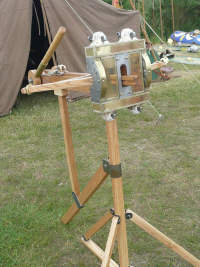
The Three-span or Larger
Scorpion bolt-shooter, is constructed from the description
by Vitruvius, Augustus' catapult engineer, and from finds such as
the iron frame discovered at Caminreal, Spain. The scorpion's accuracy
is praised by Caesar, and it was the standard legionary catapult
at the time of the Roman invasion of Britain.
|
|
This represents another Three-span design. The bronze front
piece is based on a find at Cremona in Northern Italy. The inscription
on the front plate is as follows
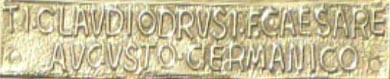
"TI.CLAVDIODRVSI.F.CAESARE
AVGVSTO GERMANICO"
This means
"For Tiberius Claudius Caesar Augustus Germanicus
the son of Drusus" (The Emperor Tiberius)
|
|
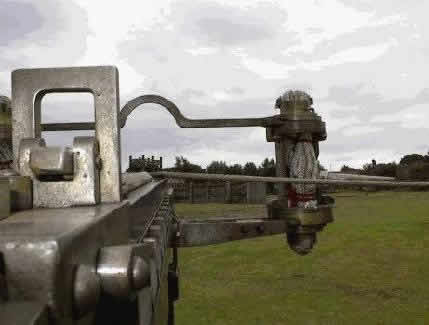
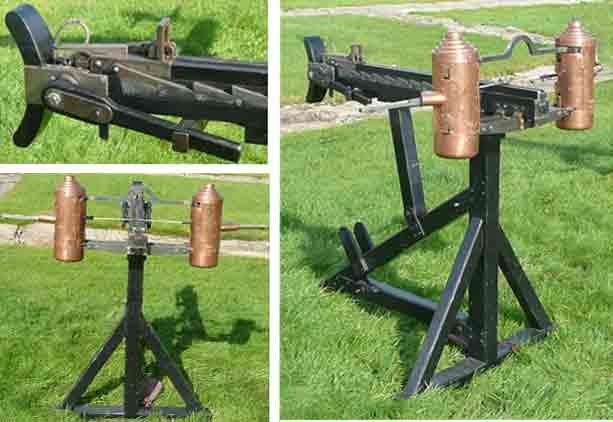
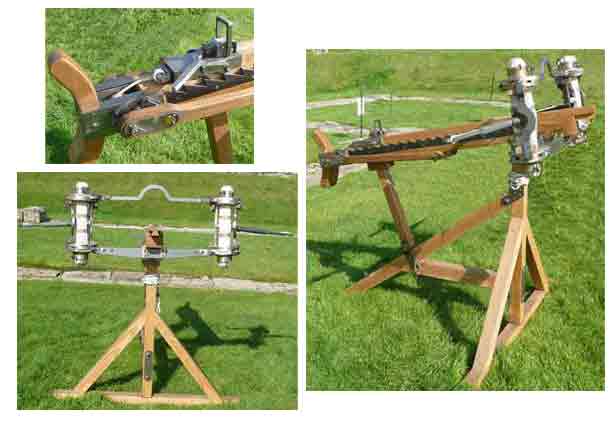
By AD 101 the Roman
army had redesigned the bolt-shooter, replacing its rather clumsy
iron-plated wooden frame with a brilliantly engineered metal framework
that increased the power and allowed an unobstructed view of the target.
A few parts from machines of this type have been found, and an illustrated
text survives describing the smallest version of this new design,
the Manuballista or LesserScorpion Modern
reconstructions of the Manuballista as a stomach-bow
ignore the categorical statement by Heron that torsion catapults were
so powerful that they required winches. |
|
|
|
|
The Xanten
catapulta
The smallest known bolt shooter in the Roman
Army.
Known to the unit as "Vespa" because of its sting.
Full article (1.3MB) |
|
|
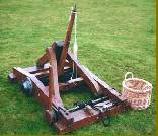
Stone-throwing catapults
The Society fields Dr Eric Marsden’s small
version of the One-arm or Onager, described by Philon and Ammianus
as a large heavy stone thrower used in sieges for defence or attack |
|
|
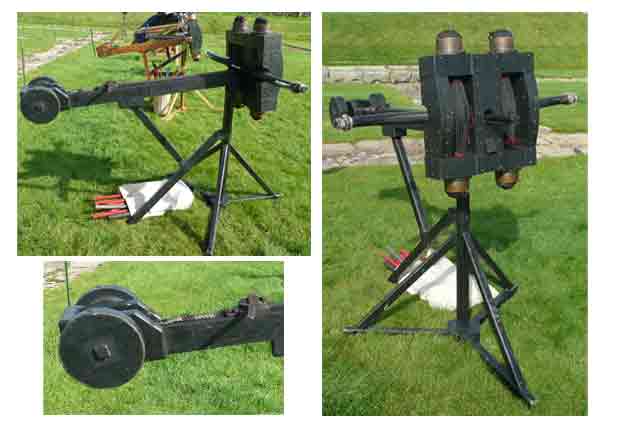
A semi-automatic catapult
A detailed verbal description is given by Philon
of the Polybolos ("multi-shooter"), a repeating bolt-shooting
catapult designed by Dionysius of Alexandria in the 3rd
century BC. This remarkable catapult is worked by a windlass
driving a double chain drive, by catches that automatically lock and
release the trigger, and by a cam mechanism that feeds bolts from
a magazine. The first full reconstruction has been built
by Moderatus for the BBC2 series "What the Romans did for us."
It offers a rate of fire at least three times that of a standard
scorpion, and it could be locked onto a target. The Roman army
would have known of this machine and may well have used it. |
|
|
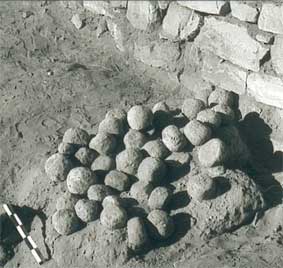
Roman Artillery
Balls from Qasr Ibrim, Egypt(6.8MB) |
|
|